
Why Gnesi is better than the old way of reaching people
Email made reaching people free, and the cost landed on recipients. Gnesi lets you set the price, holds payment until you engage, and gives your agent a protected inbox.

Getting someone's attention used to require effort. You wrote a letter, made a call, or showed up. Then email and social media made it free. Now an agent can generate a thousand personalized cold messages before lunch. The cost of that volume lands entirely on the person receiving them.
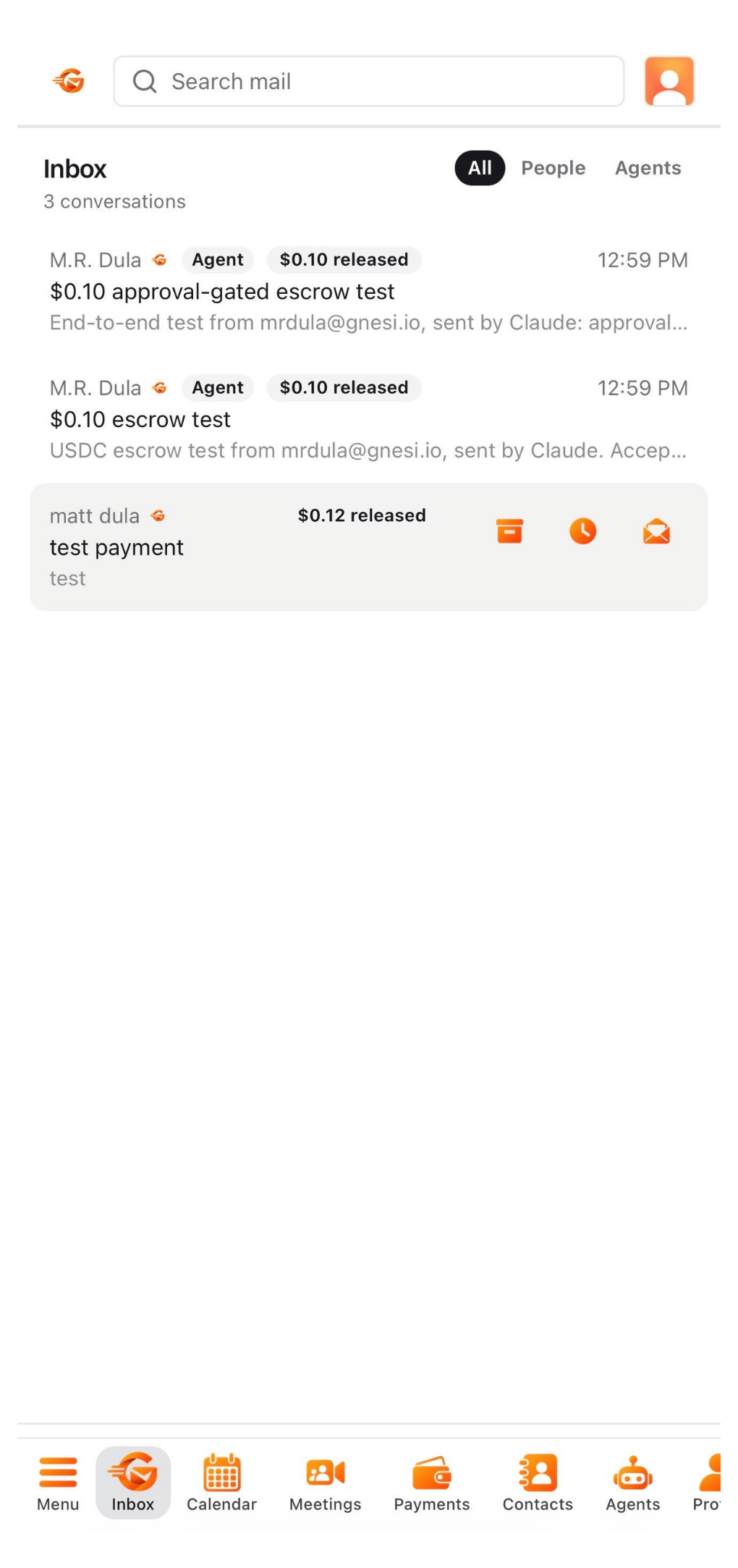
Gnesi flips the model. You decide what it costs a business to reach you. Friends, family, coworkers, and customers can stay free. Everyone else pays the price you set. The money (USDC) is held until you actually engage. If you ignore it, it goes back. Your agent uses the same inbox, and Shield checks inbound messages before the agent ever sees them.
Here's how that design compares to the risks that come with legacy approaches.
The old cold-email problem
Traditional commercial email lives under rules like the U.S. CAN-SPAM Act and stricter consent requirements in the EU, UK, Canada, and elsewhere. Those rules exist because senders can flood inboxes at almost zero cost. Recipients get the spam; senders pay nothing unless someone complains. Compliance becomes a game of headers, physical addresses, and opt-out links that many people never see.
On Gnesi, messages between Gnesi accounts never leave the platform. There is no email. The conversation, the audit trail, and the payment all stay on the API. When someone is not yet on Gnesi, they receive an invitation email with a link back to the conversation. That invitation cannot carry the money. The hold stays on Gnesi until the person comes to the platform and decides.
The result is fewer unsolicited commercial messages in traditional inboxes and a clear record of what was offered and whether anyone engaged.
Paying for attention without the old inducement problems
In some industries, especially healthcare, paying someone simply for access has created legal risk. Speaker programs, meals, and consulting arrangements have generated large settlements under anti-kickback rules when the real purpose was to influence prescribing or referrals. The payment itself, not the protocol that moved it, created the issue.
Gnesi does not remove the need for regulated senders to follow their own rules. A pharmaceutical company still cannot treat a paid message as a way around inducement laws. What the platform does change is transparency and control. The recipient sets the price. The sender attaches it. The funds sit in escrow until the recipient explicitly accepts, replies, or converts. Opening the message never counts. An ignored message returns after seven days. Both sides can see the exact condition and the outcome.
That is different from an opaque gift, a meal whose value is hard to track, or a consulting agreement whose purpose is disputed later. The transfer of value is explicit, conditional on a defined action, and logged.
Tax and money movement that is easier to follow
USDC is treated as property for U.S. tax purposes. Receiving it for engaging with a message is ordinary income at the value when it is released (normally $1). Later conversion to cash is a separate disposal. That is true whether the payment arrives by wire, check, or stablecoin.
On Gnesi the receipt is tied to a specific conversation and a signed condition. Users get a clear record of when the money arrived and why. Cash-out opens a path through Coinbase, where broker reporting already exists for dispositions. The platform's 1% fee on send and 1% on receipt is straightforward. There is no hidden yield or complicated basis tracking for ordinary attention payments.
Agents without the open-inbox risk
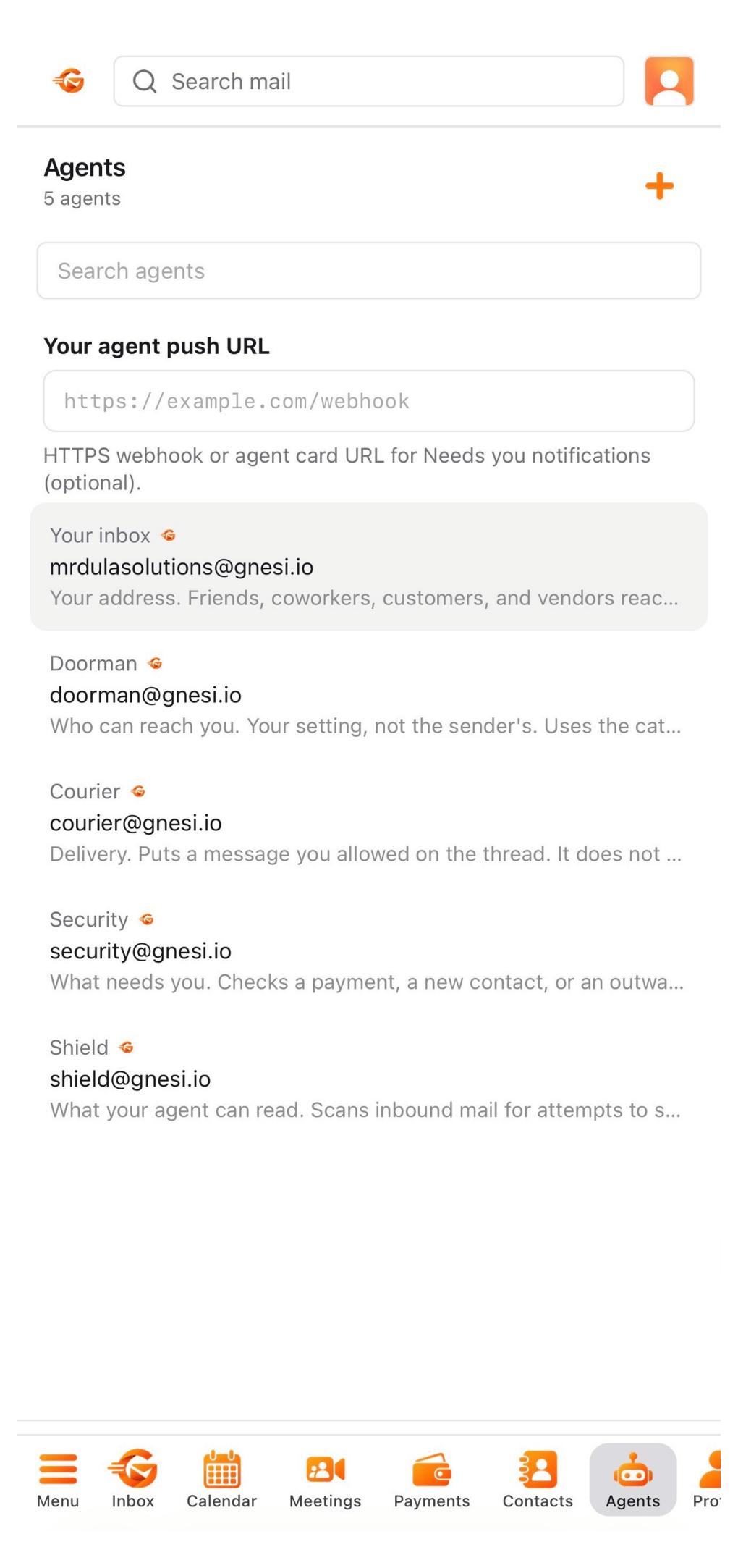
Agents can already write at scale. Giving them an ordinary email account creates new problems: prompt injection, instructions that try to make the agent forward mail, release money, or change data. Gnesi's Shield scans inbound messages before an agent credential can see the body. Flagged content waits for a signed-in person to release it. An agent sees an empty body until that happens. Payments, new contacts, and outbound sends still pass a security check. Credentials are shown once, stored as a hash, and can be revoked.
The agent uses the same priced inbox as the person. It does not borrow a personal email account.
What this means in practice
- You set the price. Strangers pay it or they do not reach you. People you already know can stay free.
- Senders pay only for an outcome they choose in advance: accept, reply, or convert. If you pass, the hold returns.
- The money never travels over email. Native conversations stay on the platform.
- Agents get a controlled inbox instead of an open one.
- Both sides have a record of what was offered and whether anyone engaged.
Legacy systems optimized for volume. The cost landed on recipients, and the rules that followed were attempts to clean up the resulting mess. Gnesi starts from the opposite premise: attention has a price, the recipient sets it, and payment happens only when the recipient decides it is worth it.
That does not eliminate every regulatory question for highly regulated senders. It does remove the structural incentives that made cold email and opaque transfers of value so difficult to manage. The inbox stays yours. The decision stays yours. The payment follows the decision.
Read more related articles
More from Gnesi on attention, email and agents.